
Preventing Slips, Trips and Falls at Work: OSHA 1910.22 Walking Surfaces Guide

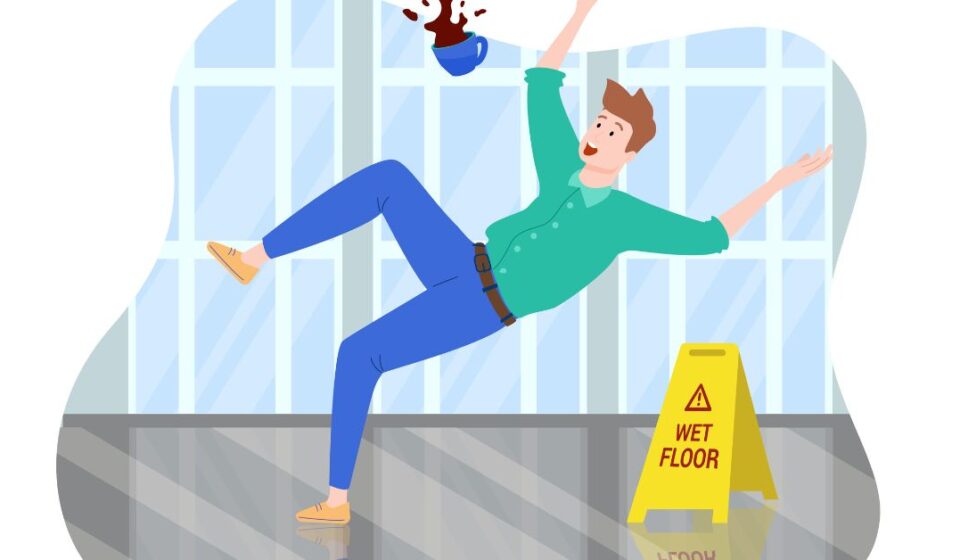
Slips, trips, and falls constitute the majority of general industry accidents, accounting for 15% of all accidental deaths and over 25% of all reported workplace injury claims. Whether occurring on same-level walking surfaces or from elevated platforms, slip and fall incidents are entirely preventable through rigorous housekeeping and surface management.
Direct Safety Takeaway: Under OSHA 29 CFR 1910.22 (Walking-Working Surfaces), employers must maintain all passageways, storerooms, service rooms, and walking surfaces in a clean, orderly, and sanitary condition. Floors must be kept clean, dry, and free from protruding nails, splinters, holes, or loose boards.
Slips vs. Trips: The Physical Mechanics Explained
| Mechanism | Physical Definition | Primary Contributing Causes | Engineering & Work Controls |
|---|---|---|---|
| Slip (Loss of Traction) | Insufficient friction between footwear and walking surface, causing foot to slide forward. | Wet floors, oil spills, ice, loose dry powder, smooth footwear outsoles. | Install high-traction abrasive flooring, mandate slip-resistant footwear (COF > 0.5), clean spills immediately. |
| Trip (Interrupted Stride) | Foot strikes an unexpected obstacle or drops into a depression, throwing center of gravity forward. | Trailing cables, uneven floor joints (>1/4 inch), clutter, damaged carpeting. (See Office Safety Guide). | Bevel uneven concrete edges, route cords overhead or in floor bridges, enforce clear aisles. |
| Fall to Same Level | Loss of balance resulting in physical impact with the walking surface. | Rushing, carrying loads that obstruct vision, distracted walking. (See Distraction Prevention). | Maintain clear line of sight, never carry oversized loads manually, walk at a controlled pace. |
| Fall to Lower Level | Falling from elevation (ladders, stairs, open edges). | Missing handrails, improper ladder angle, unguarded floor openings. (See Working at Height). | Install 42-inch guardrails, secure floor hole covers, follow the 4:1 ladder setup rule. |
The 4:1 Ladder Setup Rule
Improper portable ladder setup is a primary cause of severe fall trauma. When setting an extension ladder or straight ladder:
- The 4:1 Ratio: For every 4 feet of vertical ladder height, position the base of the ladder 1 foot away from the supporting wall (e.g., a 12-foot ladder base must be 3 feet from the wall).
- Top Extension: When accessing an upper landing surface (like a roof), the ladder side rails must extend at least 3 feet (36 inches) above the landing and be tied off at the top.
- Maintain 3 Points of Contact: Always keep two hands and one foot, or two feet and one hand, in firm contact with ladder rungs while ascending or descending.
5-Minute Safety Talk / Toolbox Topic: Floor Housekeeping
- Meeting Question: “What should you do if you encounter an unmarked liquid spill on a facility walkway?” (Answer: Clean it immediately or barricade the area with a wet floor sign while retrieving cleaning materials).
- Footwear Inspection: “Check the outsoles of your work boots: Is the tread pattern worn smooth?”
- Takeaway: “Good housekeeping is not cleaning up after a shift—it is an ongoing process of cleaning as you work.”
Daily Walking-Working Surfaces Inspection Checklist
- ☐ All pedestrian walkways clear of boxes, scrap materials, and electrical cords.
- ☐ Wet weather entrance mats laid flat with beveled edges to prevent lip-trips.
- ☐ Stairwells equipped with sturdy, continuous handrails and illuminated steps.
- ☐ Spills and grease deposits cleaned immediately using proper degreasers.
- ☐ Floor transitions greater than 1/4 inch beveled or clearly painted with hazard yellow.
- ☐ Slip-resistant safety footwear worn by all personnel in production and kitchen zones.
Frequently Asked Questions
What coefficient of friction (COF) is recommended for safe walking surfaces?
OSHA and the Americans with Disabilities Act (ADA) recommend a static Coefficient of Friction (COF) of 0.5 for level walkways and 0.6 for accessible ramps to ensure adequate slip resistance under normal walking conditions.
Authoritative Sources & Standards
- OSHA 29 CFR 1910 Subpart D: Walking-Working Surfaces (1910.21 — 1910.30).
- ANSI/ASSP A1264.1: Safety Requirements for Workplace Walking/Working Surfaces.
- National Floor Safety Institute (NFSI): Standards for Slip, Trip, and Fall Prevention.