
Skip to content
Safety Moment Ideas Safety Moment Ideas

5-Minute Workplace Safety Talks, Toolbox Topics & Practical HSE Guides

Safety Moment Ideas Safety Moment Ideas

5-Minute Workplace Safety Talks, Toolbox Topics & Practical HSE Guides

  • Home
  • About Safety Moment Ideas
  • Safety Moments
    • Workplace and Industrial Safety
    • Road and Vehicle Safety
    • Home and Office Safety
    • Fire Safety
    • Personal Protective Equipment
    • Hazardous Materials & Radiation
    • Health Safety
    • First Aid
  • Contact
  • Privacy Policy
  • Disclaimer
  • Terms and Conditions
  • Advertising Disclosure
  • Home
  • About Safety Moment Ideas
  • Safety Moments
    • Workplace and Industrial Safety
    • Road and Vehicle Safety
    • Home and Office Safety
    • Fire Safety
    • Personal Protective Equipment
    • Hazardous Materials & Radiation
    • Health Safety
    • First Aid
  • Contact
  • Privacy Policy
  • Disclaimer
  • Terms and Conditions
  • Advertising Disclosure
Close

Search

Get in Touch
Safety Moment Ideas Safety Moment Ideas

5-Minute Workplace Safety Talks, Toolbox Topics & Practical HSE Guides

Safety Moment Ideas Safety Moment Ideas

5-Minute Workplace Safety Talks, Toolbox Topics & Practical HSE Guides

  • Home
  • About Safety Moment Ideas
  • Safety Moments
    • Workplace and Industrial Safety
    • Road and Vehicle Safety
    • Home and Office Safety
    • Fire Safety
    • Personal Protective Equipment
    • Hazardous Materials & Radiation
    • Health Safety
    • First Aid
  • Contact
  • Privacy Policy
  • Disclaimer
  • Terms and Conditions
  • Advertising Disclosure
  • Home
  • About Safety Moment Ideas
  • Safety Moments
    • Workplace and Industrial Safety
    • Road and Vehicle Safety
    • Home and Office Safety
    • Fire Safety
    • Personal Protective Equipment
    • Hazardous Materials & Radiation
    • Health Safety
    • First Aid
  • Contact
  • Privacy Policy
  • Disclaimer
  • Terms and Conditions
  • Advertising Disclosure
Close

Search

Get in Touch
Working at Height Safety
Workplace and Industrial SafetyToolbox Talks & Safety Moments

Working at Height Safety: Fall Protection Hierarchy, OSHA Rules & Inspection

By John Allen
4 Min Read
1

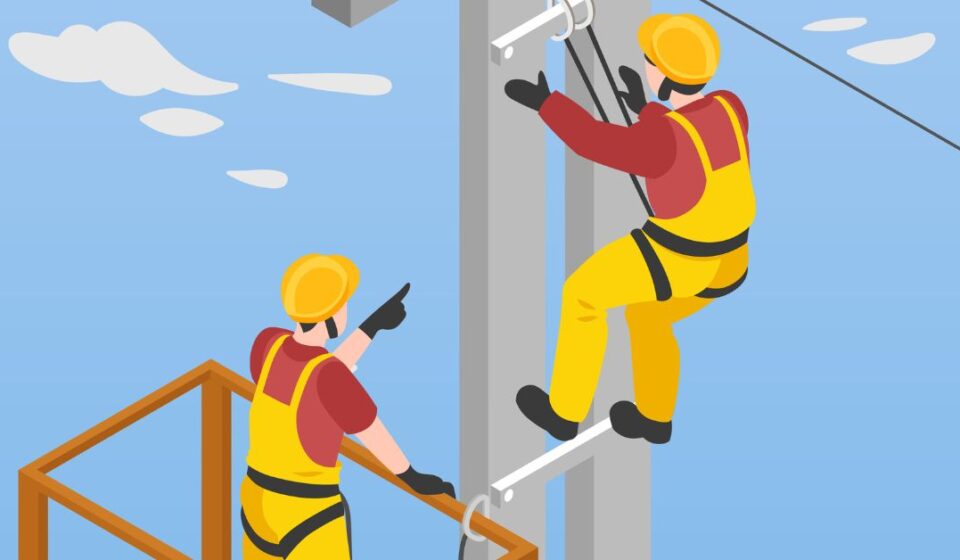
Falls from height remain the leading cause of traumatic fatalities in construction and one of the top causes of severe injuries across general industry. Preventing fall incidents requires strict compliance with regulatory trigger heights, equipment inspection, and applying the engineering hierarchy of fall controls.

Direct Safety Takeaway: OSHA mandates fall protection whenever a worker is elevated above 4 feet in General Industry (1910.28), 6 feet in Construction (1926.501), or 10 feet on Scaffolds (1926.451). Regardless of fall distance, fall protection is required when working over dangerous equipment, vats, or open machinery.

Table of Contents

Toggle
  • OSHA Fall Protection Trigger Heights by Industry
  • The Hierarchy of Fall Protection Controls
    • 1. Elimination (Preferred)
    • 2. Passive Fall Prevention (Guardrails & Covers)
    • 3. Fall Restraint Systems
    • 4. Personal Fall Arrest Systems (PFAS)
  • Calculating Total Fall Clearance Distance
  • 5-Minute Safety Talk: Fall Protection & Harness Checks
  • Daily Fall Protection Pre-Use Inspection Checklist
  • Frequently Asked Questions
    • What is suspension trauma and why is it dangerous?
    • Can a body belt be used for fall arrest?
    • Regulatory Standards & Authoritative Sources

OSHA Fall Protection Trigger Heights by Industry

Industry / EnvironmentTrigger HeightOSHA Standard Reference
General Industry Facilities4 Feet (1.2 m)OSHA 29 CFR 1910.28(b)(1)(i)
Shipyards & Maritime5 Feet (1.5 m)OSHA 29 CFR 1915.73
Construction Sites6 Feet (1.8 m)OSHA 29 CFR 1926.501(b)(1)
Longshoring Operations8 Feet (2.4 m)OSHA 29 CFR 1918.85
Scaffolding10 Feet (3.0 m)OSHA 29 CFR 1926.451(g)(1)
Steel Erection (Connectors)15 to 30 Feet (4.5 to 9.1 m)OSHA 29 CFR 1926.760
Over Dangerous MachineryAny Height (0 ft)OSHA 29 CFR 1910.28 / 1926.501
OSHA Regulatory Fall Protection Thresholds Summary.

The Hierarchy of Fall Protection Controls

1. Elimination (Preferred)

Design work so it can be performed from ground level using extendable pole tools, pre-assembling components on the ground before crane lifting (see Crane & Lifting Safety), or using drones for facility roof inspections.

2. Passive Fall Prevention (Guardrails & Covers)

Install standard guardrail systems: top rail at 42 inches (± 3 inches), mid-rail at 21 inches, and toeboards (minimum 3.5 inches height) to prevent dropped tool hazards (see Hand Tool Safety). Secure and clearly label floor hole covers capable of supporting twice the intended maximum load.

3. Fall Restraint Systems

Rig lanyard and anchor lengths so the worker is physically prevented from reaching an unprotected roof edge or fall hazard.

4. Personal Fall Arrest Systems (PFAS)

When falls cannot be prevented, PFAS safely halts the worker in mid-air. Remember the ABCDE of PFAS:

  • A — Anchorage: Anchor points must support at least 5,000 lbs (22.2 kN) per attached worker or have a safety factor of two under engineer supervision.
  • B — Body Wear: Full-body harness with dorsal D-ring (body belts are strictly prohibited for fall arrest).
  • C — Connecting Device: Shock-absorbing lanyard or Self-Retracting Lifeline (SRL).
  • D — Deceleration Device: Energy absorber that limits arresting force on the human body to under 1,800 lbs.
  • E — Emergency Rescue Plan: Plan to retrieve suspended workers within 6 to 10 minutes to prevent suspension trauma.

Calculating Total Fall Clearance Distance

Never rely on intuition when determining lanyard lengths. Calculate the required minimum clearance before connecting:

  • Lanyard Length: 6 feet
  • + Deceleration Expansion: 3.5 feet
  • + Worker Height & Harness Stretch: 6 feet
  • + Safety Factor Margin: 3 feet
  • = Total Minimum Fall Clearance: 18.5 Feet below the anchor point.

5-Minute Safety Talk: Fall Protection & Harness Checks

  • Meeting Question: “What is the maximum arresting force allowed on a worker wearing a full-body harness during a fall?” (Answer: 1,800 lbs).
  • Practical Check: “Inspect your harness stitching and webbing for cuts, burns, chemical wear, or deployed impact indicators.”
  • Supervisor Note: “If any harness or lanyard has experienced a fall, remove it from service and destroy it immediately.”

Daily Fall Protection Pre-Use Inspection Checklist

  • ☐ Full-body harness webbing inspected for frayed edges, broken fibers, pulled stitches, or chemical burns.
  • ☐ D-rings, grommets, and buckle hardware checked for distortion, cracks, and rust pitting.
  • ☐ Snap hooks and carabiners have self-closing, double-locking gates functioning properly.
  • ☐ Certified anchor point identified and rated for 5,000 lbs per attached worker.
  • ☐ Total fall clearance calculated to verify worker will not contact lower level.
  • ☐ Ladder inspected: rungs clean, side rails undamaged, set at 4:1 slope (see Slip, Trip & Fall Prevention).
  • ☐ Written prompt rescue procedure established and communicated to crew.

Frequently Asked Questions

What is suspension trauma and why is it dangerous?

Suspension trauma (orthostatic intolerance) occurs when a worker hangs motionless in a harness after a fall. Leg harness straps pool venous blood in the lower limbs, depriving the brain and heart of oxygen, which can cause unconsciousness or death in under 15 minutes. Harness trauma relief straps and rapid rescue are essential.

Can a body belt be used for fall arrest?

No. OSHA banned body belts for fall arrest in 1998 due to severe spinal trauma and asphyxiation risks. Body belts may only be used for positioning or travel restraint.


Regulatory Standards & Authoritative Sources

  • OSHA 29 CFR 1910.28: Duty to have fall protection and falling object protection (General Industry).
  • OSHA 29 CFR 1926 Subpart M: Fall Protection (1926.500 — 1926.503 Construction).
  • ANSI/ASSP Z359 Fall Protection Code: American National Standard for Fall Arrest and Restraint.

Tags:

Height SafetyWorking at Height Safety
Author

John Allen

John Allen is the founder and technical safety editor of Safety Moment Ideas. With over a decade of experience analyzing industrial workplace safety, contractor management, and HSE compliance, he specializes in translating OSHA, NIOSH, and NFPA standards into concise, actionable 5-minute toolbox talks and field inspection checklists for supervisors and safety committees.

Follow Me
Other Articles
Crane Safety
Previous

Crane Safety on Job Sites: Lift Planning, Rigging Rules & Daily Inspection

Rubber Insulating Gloves Safety
Next

Rubber Insulating Gloves: OSHA Voltage Classes, Air Testing & Care Guide

One Comment
  1. Rubber Insulating Gloves: Your Key to Electrical Safety - Safety Moment Ideas says:
    February 17, 2026 at 3:35 pm

    […] Read more: How Can You Improve Working at Height Safety? […]

    Reply

Leave a Reply Cancel reply

Your email address will not be published. Required fields are marked *

Latest Posts

  • Best Ways to Handle Stress
    Workplace Stress Management: 7 Practical Steps, Prevention & Toolbox Talk
    by John Allen
  • Heat Safety
    Workplace Heat Safety: OSHA Limits, Prevention & First Aid Guide
    by John Allen
  • Pressure testing
    Pressure Testing Safety: Hydrostatic & Pneumatic Safe Work Procedures
    by John Allen
  • Road Safety
    Vehicle Safety Choice: How Crash Ratings, Size & ADAS Impact Road Safety
    by John Allen
  • tinnitus
    Occupational Tinnitus & Hearing Conservation: OSHA 1910.95 Noise Limits & PPE
    by John Allen

We are a Safety Moments platform dedicated to sharing short, practical safety insights that help prevent incidents and promote a strong safety culture. Our content is written to be clear, relevant, and easy to apply in daily work environments.

Categories
  • Fire Safety
  • First Aid
  • Hazardous Materials & Radiation
  • Health Safety
  • Home and Office Safety
  • Personal Protective Equipment
  • Road and Vehicle Safety
  • Toolbox Talks & Safety Moments
  • Workplace and Industrial Safety
Latest Post
  • Workplace Stress Management: 7 Practical Steps, Prevention & Toolbox Talk
  • Workplace Heat Safety: OSHA Limits, Prevention & First Aid Guide
  • Pressure Testing Safety: Hydrostatic & Pneumatic Safe Work Procedures
  • Vehicle Safety Choice: How Crash Ratings, Size & ADAS Impact Road Safety
  • Occupational Tinnitus & Hearing Conservation: OSHA 1910.95 Noise Limits & PPE
Copyright 2026 — Safety Moment Ideas. All rights reserved. Privacy Policy | Terms & Conditions | Disclaimer

🍪 We use cookies and Google AdSense to serve relevant ads. Privacy Policy | Ad Disclosure