
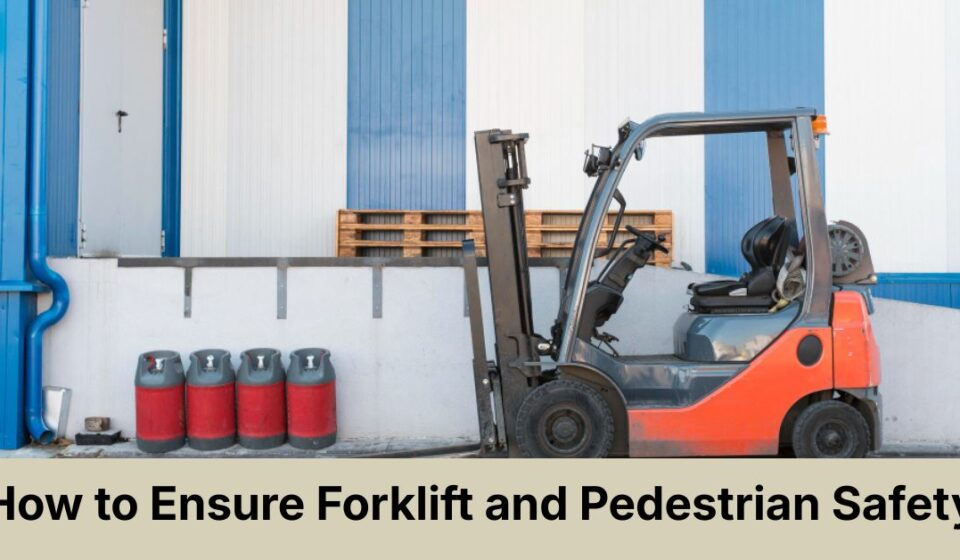

Forklifts are powerful machines that move heavy loads quickly. They are essential in warehouses, construction sites, and industrial workplaces. But when forklifts share space with pedestrians, the risk becomes real. Forklifts and pedestrians safety focuses on creating clear separation, strong communication, and smart behavior so everyone stays protected.
The problem is that forklifts often operate in busy areas where people are walking, carrying tools, or moving quickly. Pedestrians may not notice a forklift approaching, especially if the operator is hidden by a load or blind corner. This is why forklift safety is not only the operator’s responsibility—it is everyone’s job.
Why Forklifts and Pedestrians Safety Is Necessary
Forklifts can weigh several tons and cannot stop instantly. Even at slow speeds, a collision can cause severe injuries or fatalities. Forklifts and pedestrians safety is necessary because pedestrians are vulnerable and often unprotected. Unlike operators who are inside a vehicle, pedestrians rely on awareness and safe behavior.
Forklift incidents can happen in seconds. A moment of distraction, a blind corner, or a fast turn can lead to serious accidents. When forklifts and pedestrians share space, there must be rules that reduce risk and keep everyone alert. Safety is not about blame—it’s about preventing harm before it happens.
Common Causes of Forklift-Pedestrian Incidents
Most forklift-related incidents involve predictable mistakes. Common causes include:
- Poor visibility due to loads blocking the operator’s view
- No designated pedestrian pathways
- Speeding or sharp turns
- Distracted pedestrians or operators
- Failure to use horns at intersections
- Inadequate training or supervision
- Overloaded or unstable loads
- Poor lighting or cluttered walkways
Many incidents happen when pedestrians assume the operator sees them. In reality, operators may not see a person walking behind a load or around a corner. That is why communication and clear pathways are essential.
Read more: What Are the Best Practices for Identifying Hazards?
Practical Steps to Improve Forklifts and Pedestrians Safety
Improving forklifts and pedestrians safety requires planning, rules, and teamwork. These practical steps help prevent accidents every day:
1. Create Clear Walkways and Traffic Routes
- Designate separate paths for pedestrians and forklifts
- Use painted lines, signs, and barriers
- Keep walkways clear of obstacles and debris
- Ensure loading areas are organized and not crowded
When routes are clear, everyone knows where to walk and where to drive.
2. Improve Visibility and Communication
- Install mirrors at blind corners
- Use warning lights and audible alarms on forklifts
- Require operators to use horns at intersections
- Encourage eye contact between operators and pedestrians
- Use high-visibility clothing for pedestrians
Visibility prevents surprise and reduces the chance of collisions.
3. Train Operators and Pedestrians
- Provide forklift training and certification
- Teach pedestrians about forklift hazards and safe behavior
- Reinforce rules regularly through toolbox talks
- Encourage reporting of unsafe conditions
Training builds awareness and reinforces safe habits.
4. Safe Operation Practices for Forklift Operators
- Drive at safe speed and slow down near pedestrians
- Avoid sharp turns and sudden stops
- Keep loads low to improve visibility
- Never carry passengers unless allowed
- Stop completely at intersections and look both ways
Operators must treat every movement as a potential risk.
5. Safe Behavior for Pedestrians
- Stay in marked walkways and avoid shortcut routes
- Never walk under raised loads
- Avoid distractions like phones or headphones
- Make eye contact with operators before crossing
- Stay clear of forklifts during loading and unloading
Pedestrians should remember that forklifts do not stop quickly.
Conclusion
Forklifts and pedestrians safety depends on teamwork, clear rules, and constant awareness. When operators drive responsibly and pedestrians follow pathways, accidents become rare. Respect the space of forklifts, stay alert, and remember that safety is a shared responsibility.
Download Pdf Here



[…] Read more: How to Ensure Forklifts and Pedestrians Safety […]