
Skip to content
Safety Moment Ideas Safety Moment Ideas

5-Minute Workplace Safety Talks, Toolbox Topics & Practical HSE Guides

Safety Moment Ideas Safety Moment Ideas

5-Minute Workplace Safety Talks, Toolbox Topics & Practical HSE Guides

  • Home
  • About Safety Moment Ideas
  • Safety Moments
    • Workplace and Industrial Safety
    • Road and Vehicle Safety
    • Home and Office Safety
    • Fire Safety
    • Personal Protective Equipment
    • Hazardous Materials & Radiation
    • Health Safety
    • First Aid
  • Contact
  • Privacy Policy
  • Disclaimer
  • Terms and Conditions
  • Advertising Disclosure
  • Home
  • About Safety Moment Ideas
  • Safety Moments
    • Workplace and Industrial Safety
    • Road and Vehicle Safety
    • Home and Office Safety
    • Fire Safety
    • Personal Protective Equipment
    • Hazardous Materials & Radiation
    • Health Safety
    • First Aid
  • Contact
  • Privacy Policy
  • Disclaimer
  • Terms and Conditions
  • Advertising Disclosure
Close

Search

Get in Touch
Safety Moment Ideas Safety Moment Ideas

5-Minute Workplace Safety Talks, Toolbox Topics & Practical HSE Guides

Safety Moment Ideas Safety Moment Ideas

5-Minute Workplace Safety Talks, Toolbox Topics & Practical HSE Guides

  • Home
  • About Safety Moment Ideas
  • Safety Moments
    • Workplace and Industrial Safety
    • Road and Vehicle Safety
    • Home and Office Safety
    • Fire Safety
    • Personal Protective Equipment
    • Hazardous Materials & Radiation
    • Health Safety
    • First Aid
  • Contact
  • Privacy Policy
  • Disclaimer
  • Terms and Conditions
  • Advertising Disclosure
  • Home
  • About Safety Moment Ideas
  • Safety Moments
    • Workplace and Industrial Safety
    • Road and Vehicle Safety
    • Home and Office Safety
    • Fire Safety
    • Personal Protective Equipment
    • Hazardous Materials & Radiation
    • Health Safety
    • First Aid
  • Contact
  • Privacy Policy
  • Disclaimer
  • Terms and Conditions
  • Advertising Disclosure
Close

Search

Get in Touch
Dangerous Goods Safety
Hazardous Materials & RadiationToolbox Talks & Safety Moments

Dangerous Goods Safety: GHS Pictograms, SDS Rules & Chemical Spill Response

By John Allen
3 Min Read
2

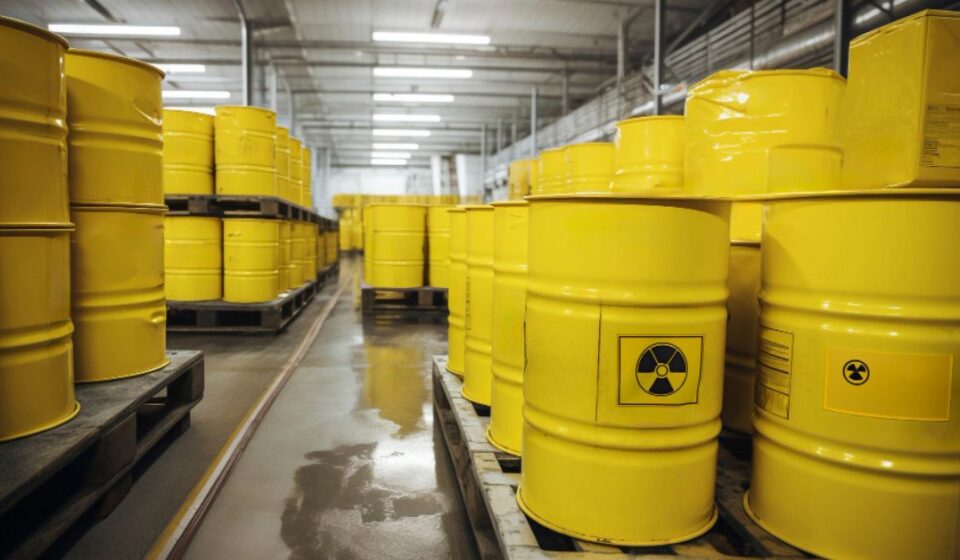
Hazardous materials and dangerous goods are present in virtually every industrial facility, warehouse, and maintenance department. Failure to properly classify, store, label, and handle hazardous chemicals exposes workers to catastrophic fire, chemical burns, asphyxiation, and long-term carcinogenicity.

Direct Safety Takeaway: Under OSHA’s Hazard Communication Standard (29 CFR 1910.1200 / GHS), every hazardous chemical must have a standardized 16-Section Safety Data Sheet (SDS), unambiguous manufacturer warning labels, and certified GHS pictograms. Never transfer chemicals into secondary containers without immediately applying an OSHA-compliant GHS secondary label.

Table of Contents

Toggle
  • The 9 Globally Harmonized System (GHS) Hazard Pictograms
  • The 16-Section Safety Data Sheet (SDS) Structure
  • Chemical Spill Emergency Response: The SWIM Protocol
  • 5-Minute Safety Talk / Toolbox Topic: Secondary Container Labeling
  • Chemical Storage & HazCom Audit Checklist
  • Frequently Asked Questions
    • What is the difference between “Danger” and “Warning” on GHS labels?
    • Authoritative Sources & Standards

The 9 Globally Harmonized System (GHS) Hazard Pictograms

GHS Pictogram SymbolHazard CategoryKey Health / Physical Dangers
FlameFlammables & Self-HeatingFlammable gases, liquids, aerosols, pyrophoric substances. (See Fire Prevention Guide).
CorrosionCorrosivesCauses irreversible skin destruction, serious eye damage (wear ANSI Z87.1 splash goggles), and metal corrosion.
Skull and CrossbonesAcute ToxicityFatal or toxic in short-term exposure via inhalation, ingestion, or skin contact.
Health Hazard (Starburst Chest)Chronic Health HazardsCarcinogens, respiratory sensitizers, reproductive toxicity, target organ toxicity.
Exclamation MarkIrritant / Skin SensitizerHarmful irritant, narcotic effects, acute toxicity (less severe).
Gas CylinderCompressed GasesLiquefied, dissolved, or cryogenic gases under pressure (risk of rocket propulsion or explosion).
Exploding BombExplosivesSelf-reactive substances, organic peroxides, unstable explosives.
Flame Over CircleOxidizersReleases oxygen, accelerating fires in combustible materials.
Environment (Fish & Tree)Aquatic ToxicityAcute and long-term aquatic environmental damage (EPA regulated).
OSHA 1910.1200 Appendix E: GHS Pictogram Reference.

The 16-Section Safety Data Sheet (SDS) Structure

When evaluating an unfamiliar chemical, frontline supervisors and technicians must consult the following priority sections on the standardized SDS:

  • Section 2 (Hazard Identification): Signal words (DANGER vs WARNING), hazard statements, and required pictograms.
  • Section 4 (First-Aid Measures): Immediate symptoms and emergency response protocols. (See First Aid Essentials).
  • Section 8 (Exposure Controls & Personal Protection): Permissible Exposure Limits (PELs) and required PPE specifications (respirators, glove materials).
  • Section 10 (Stability & Reactivity): Incompatible chemical families (e.g., never store acids with bases or oxidizers with flammables).

Chemical Spill Emergency Response: The SWIM Protocol

If an incidental chemical release occurs within your department, execute the SWIM protocol immediately:

  1. S — Stop the Source: Only if safe and trained to do so (e.g., righting an overturned container or closing a valve while wearing proper PPE).
  2. W — Warn Others: Notify coworkers in the immediate zone, alert the supervisor, and secure the perimeter.
  3. I — Isolate the Area: Evacuate non-essential personnel and eliminate nearby ignition sources.
  4. M — Mitigate with Spill Kits: Deploy chemical absorbent socks, pads, and neutralizers from designated spill response stations.

5-Minute Safety Talk / Toolbox Topic: Secondary Container Labeling

  • Meeting Question: “What must you do if you transfer solvent or degreaser from a 55-gallon drum into a spray bottle or small container?” (Answer: Immediately affix a secondary GHS label identifying chemical name and hazards).
  • Discussion Topic: “Where is our facility SDS master binder located, and how do you access electronic SDS sheets on mobile?”
  • Supervisor Reminder: “Never store chemicals in unlabeled drink bottles or food containers—this is an extreme poisoning hazard.”

Chemical Storage & HazCom Audit Checklist

  • ☐ All primary and secondary chemical containers clearly labeled with GHS pictograms and signal words.
  • ☐ SDS library complete, indexed, and accessible to all shifts without password barriers.
  • ☐ Incompatible chemicals separated by physical distance or approved spill containment berms.
  • ☐ Flammable liquids stored in UL-listed yellow flammable safety cabinets.
  • ☐ Chemical spill response kits stocked with neutralizers, pads, and disposal bags.
  • ☐ Eyewash stations and safety showers inspected weekly with flow testing verified.

Frequently Asked Questions

What is the difference between “Danger” and “Warning” on GHS labels?

Under GHS standards, DANGER indicates severe hazard categories (higher risk of fatal injury or severe explosion), while WARNING is used for less severe hazard categories.


Authoritative Sources & Standards

  • OSHA 29 CFR 1910.1200: Hazard Communication Standard (GHS Alignment).
  • DOT 49 CFR Parts 100-185: Hazardous Materials Transportation Regulations.
  • EPA: Emergency Planning and Community Right-to-Know Act (EPCRA).
Author

John Allen

John Allen is the founder and technical safety editor of Safety Moment Ideas. With over a decade of experience analyzing industrial workplace safety, contractor management, and HSE compliance, he specializes in translating OSHA, NIOSH, and NFPA standards into concise, actionable 5-minute toolbox talks and field inspection checklists for supervisors and safety committees.

Follow Me
Other Articles
Before You Travel Safety
Previous

Work Travel Safety: Pre-Trip Vehicle Inspection, Route Planning & Emergency Kit

Radiation Safety
Next

Radiation Safety at Work: ALARA Principles, Shielding & Exposure Limits

2 Comments
  1. What Are the Best Practices for Radiation Safety? - Safety Moment Ideas says:
    February 25, 2026 at 3:55 pm

    […] Read more: How To Ensure Dangerous Goods Safety at Work? […]

    Reply
  2. Fire Safety: Your Guide to Staying Safe - Safety Moment Ideas says:
    March 27, 2026 at 2:08 pm

    […] Read more: How To Ensure Dangerous Goods Safety at Work? […]

    Reply

Leave a Reply Cancel reply

Your email address will not be published. Required fields are marked *

Latest Posts

  • Best Ways to Handle Stress
    Workplace Stress Management: 7 Practical Steps, Prevention & Toolbox Talk
    by John Allen
  • Heat Safety
    Workplace Heat Safety: OSHA Limits, Prevention & First Aid Guide
    by John Allen
  • Pressure testing
    Pressure Testing Safety: Hydrostatic & Pneumatic Safe Work Procedures
    by John Allen
  • Road Safety
    Vehicle Safety Choice: How Crash Ratings, Size & ADAS Impact Road Safety
    by John Allen
  • tinnitus
    Occupational Tinnitus & Hearing Conservation: OSHA 1910.95 Noise Limits & PPE
    by John Allen

We are a Safety Moments platform dedicated to sharing short, practical safety insights that help prevent incidents and promote a strong safety culture. Our content is written to be clear, relevant, and easy to apply in daily work environments.

Categories
  • Fire Safety
  • First Aid
  • Hazardous Materials & Radiation
  • Health Safety
  • Home and Office Safety
  • Personal Protective Equipment
  • Road and Vehicle Safety
  • Toolbox Talks & Safety Moments
  • Workplace and Industrial Safety
Latest Post
  • Workplace Stress Management: 7 Practical Steps, Prevention & Toolbox Talk
  • Workplace Heat Safety: OSHA Limits, Prevention & First Aid Guide
  • Pressure Testing Safety: Hydrostatic & Pneumatic Safe Work Procedures
  • Vehicle Safety Choice: How Crash Ratings, Size & ADAS Impact Road Safety
  • Occupational Tinnitus & Hearing Conservation: OSHA 1910.95 Noise Limits & PPE
Copyright 2026 — Safety Moment Ideas. All rights reserved. Privacy Policy | Terms & Conditions | Disclaimer

🍪 We use cookies and Google AdSense to serve relevant ads. Privacy Policy | Ad Disclosure