
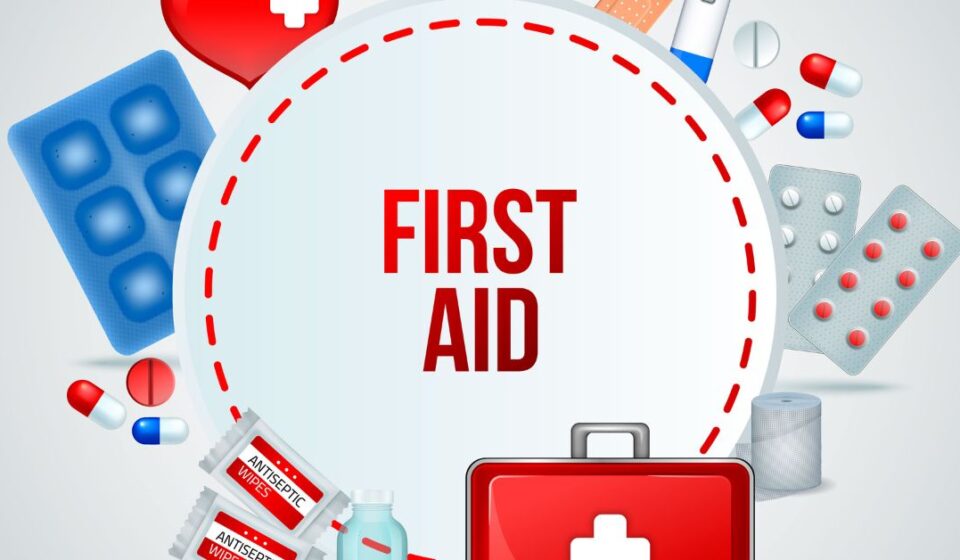

Workplace first aid is the immediate assistance provided to an injured or ill worker before professional Emergency Medical Services (EMS) arrive. The first 3 to 5 minutes following a workplace trauma, cardiac arrest, or chemical exposure determine the survival and long-term recovery of the victim.
Direct Safety Takeaway: OSHA Standard 29 CFR 1910.151 requires employers to ensure ready availability of medical personnel for advice and consultation, and in the absence of an infirmary or clinic in near proximity, one or more persons must be adequately trained to render first aid.
The 4 Primary Action Steps in Any Workplace Emergency (DRAB)
- Danger (Assess Scene Safety): Ensure the area is safe for yourself and the victim before entering. Check for live electrical wires, hazardous gases, fire, or falling objects. (Never become a second victim).
- Response (Check Responsiveness): Tap the person firmly on the shoulder and ask loudly, “Are you okay?”
- Airway & Breathing: Open airway with head-tilt/chin-lift and observe for normal breathing for no more than 10 seconds.
- Call for Help: Designate a specific individual: “You in the blue shirt—call 911 and retrieve the AED and First Aid Kit immediately.”
Emergency First Aid Protocol Matrix
| Emergency Type | Key Indicators | Immediate First Aid Action | Crucial Don’ts |
|---|---|---|---|
| Severe Bleeding | Spurting or continuous dark/bright red blood flow. | Apply firm, continuous direct pressure with sterile gauze. If bleeding continues on a limb, apply a commercial tourniquet 2–3 inches above the wound. | Do not remove soaked dressings—add more on top. Do not loosen a tourniquet once applied. |
| Cardiac Arrest | Unresponsive, no pulse, no breathing or only gasping. | Start Hands-Only CPR immediately: 100–120 compressions/min at 2 inches depth in center of chest. Deploy Automated External Defibrillator (AED) as soon as available. | Do not delay chest compressions to check for subtle breathing. |
| Thermal Burns | Redness, blistering, charred skin from heat or hot surfaces. | Cool immediately with cool, clean running water for 10–20 minutes. Cover loosely with sterile, non-adherent dressing. | Do not apply ice, butter, grease, or pop blisters. |
| Chemical Burns | Skin burning, stinging, discoloration from chemical contact. | Brush dry powder off first, then flush skin or eyes with continuous clean water for at least 15 minutes at an eyewash station. Check Safety Data Sheets (SDS). | Do not attempt to neutralize acids with bases. |
| Fractures & Trauma | Severe pain, swelling, deformity, inability to move limb. | Immobilize in the position found using splints or padding. Apply cold pack wrapped in cloth to reduce swelling. | Do not attempt to push bone fragments back into place. |
| Heat Stroke | Confusion, hot dry/sweaty skin, fainting during hot shifts. | Call 911 immediately. Move to shade and cool aggressively with ice packs or cold water immersion. (See Heat Safety Guide). | Do not force fluids if victim is disoriented or vomiting. |
OSHA Compliant Workplace First Aid Kit Checklist (ANSI/ISEA Z308.1)
Every industrial, commercial, and construction workplace must maintain a certified Class A or Class B first aid kit inspected monthly:
- ☐ Adhesive bandages (assorted sizes) & adhesive cloth tape.
- ☐ Sterile gauze pads (3×3 in, 4×4 in) & roller bandages.
- ☐ Trauma pads / abdominal dressings (5×9 in).
- ☐ Antiseptic wipe packets & antibiotic ointment.
- ☐ Medical-grade disposable nitrile gloves (latex-free).
- ☐ CPR face shield or pocket mask with one-way valve.
- ☐ Burn dressings & hydrogel burn treatment packets.
- ☐ Eye wash solution (sterile isotonic solution) & eye pads.
- ☐ Heavy-duty trauma shears & medical tweezers.
- ☐ Tourniquet (for high-hazard industrial/construction sites).
5-Minute Safety Talk: Emergency Action & First Aid Readiness
- Meeting Question: “Where are the two closest first aid kits and the nearest AED located in our immediate work zone?”
- Demonstration: “Identify the nearest emergency exit path and verify that access is clear.” (Review our guide on workplace emergency exits).
- Supervisor Reminder: “All injuries, including minor cuts and punctures, must be reported and logged to prevent infection and identify root causes.”
Frequently Asked Questions
Are Good Samaritan laws applicable in workplace first aid situations?
In general, Good Samaritan laws protect individuals who provide emergency assistance in good faith without expectation of compensation. However, designated workplace first aid responders act as part of their employment duties and must adhere to company emergency response procedures and OSHA training standards.
How often should workplace first aid kits be inspected?
First aid kits should be inspected at least monthly and immediately replenished after any workplace incident. Verify expiration dates on sterile dressings, eyewash solutions, and burn treatments.
Regulatory Standards & Authoritative Sources
- OSHA 29 CFR 1910.151: Medical Services and First Aid.
- ANSI/ISEA Z308.1-2021: American National Standard – Minimum Requirements for Workplace First Aid Kits and Supplies.
- American Heart Association (AHA) & American Red Cross: 2020 Guidelines for First Aid and CPR.


[…] Read more: First Aid Saves Lives Essentials: Your Guide to Life-Saving Skills […]